
The Creative Convergence “Interview with Astronaut John E. Blaha” Podcast
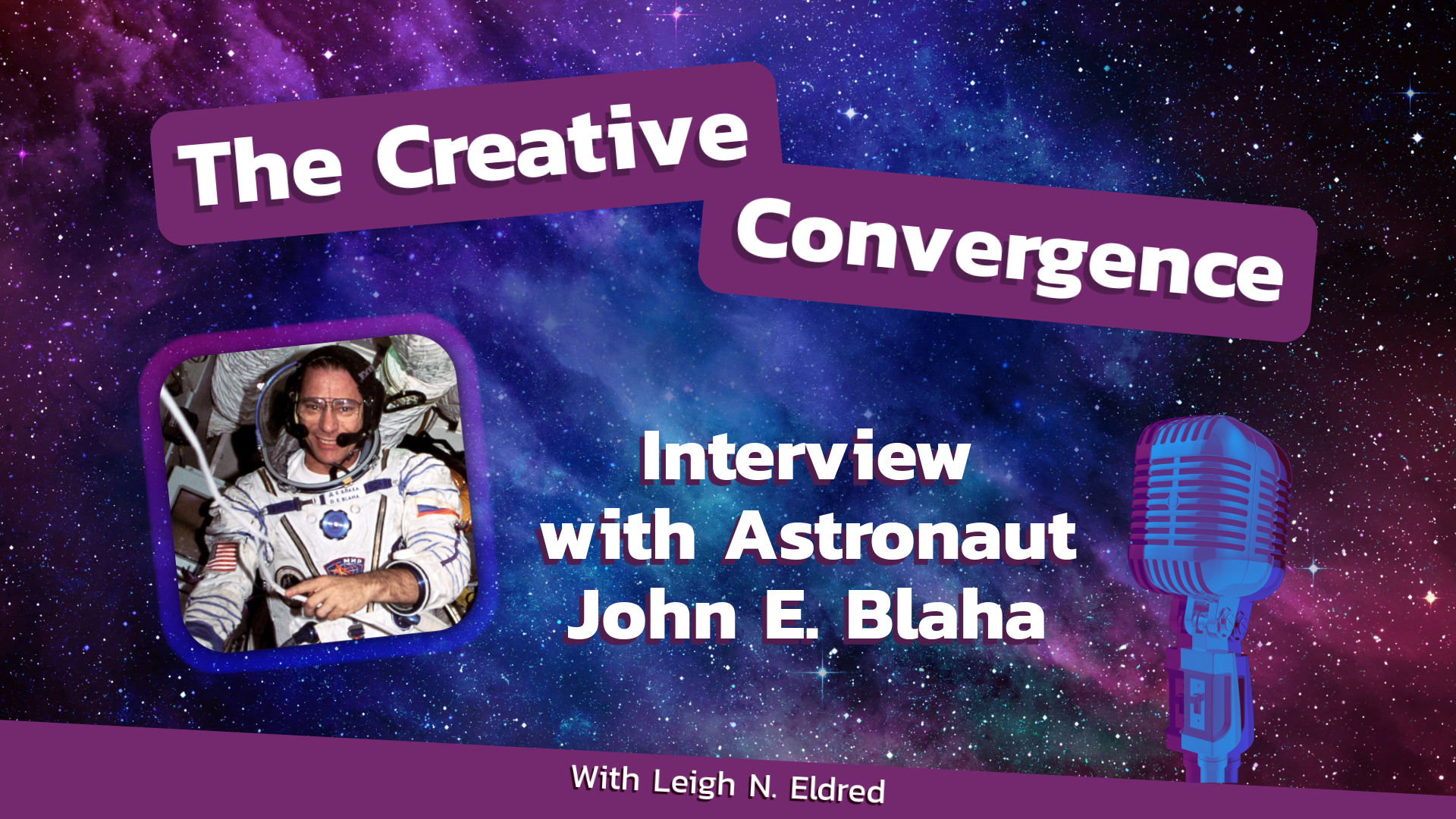
Video Podcast Opening & Thumbnail Image
Creative Convergence Video Podcast Still Images
Video Podcast Still Image
Video Podcast Still Image
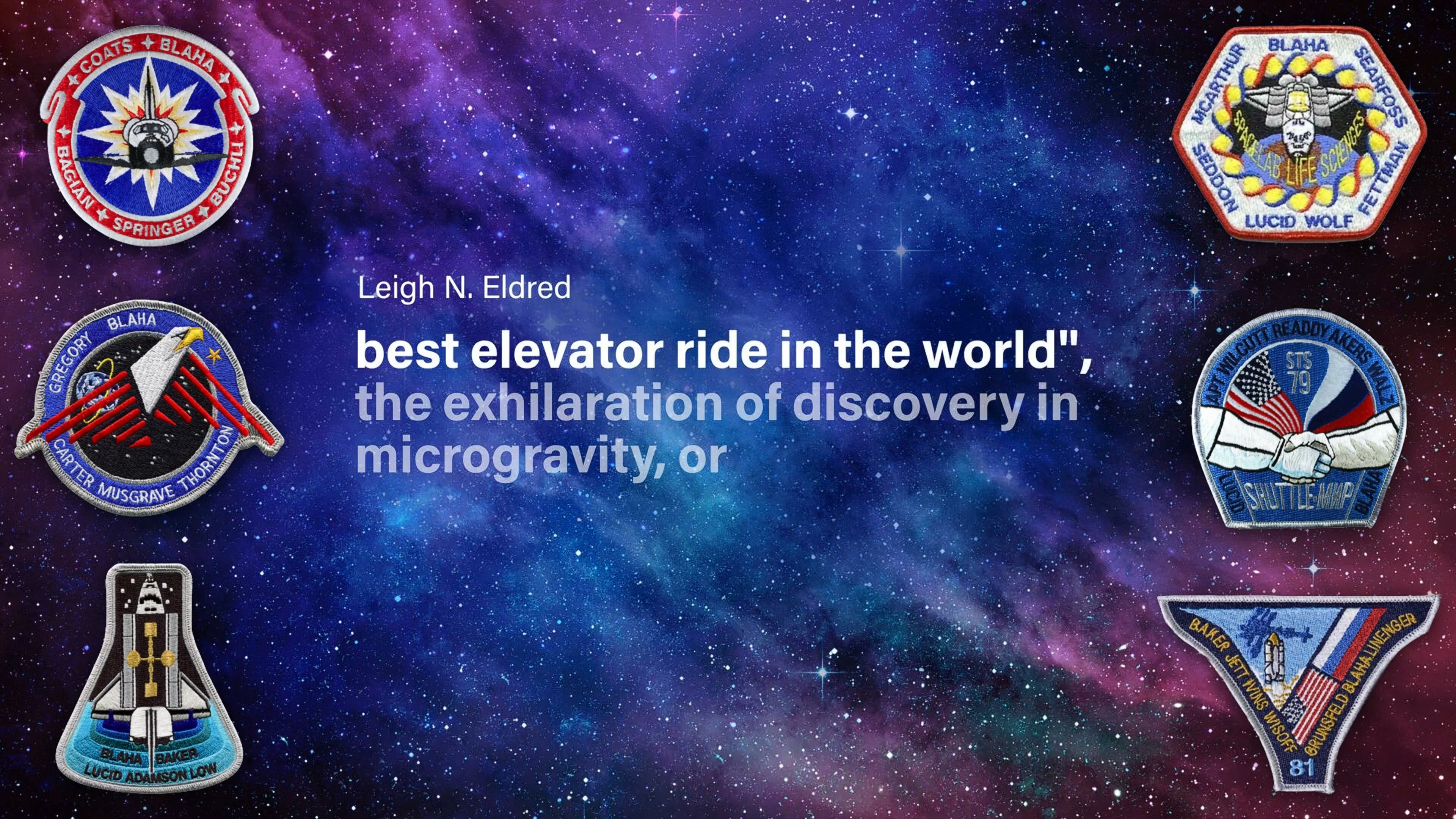
Video Podcast Still Image
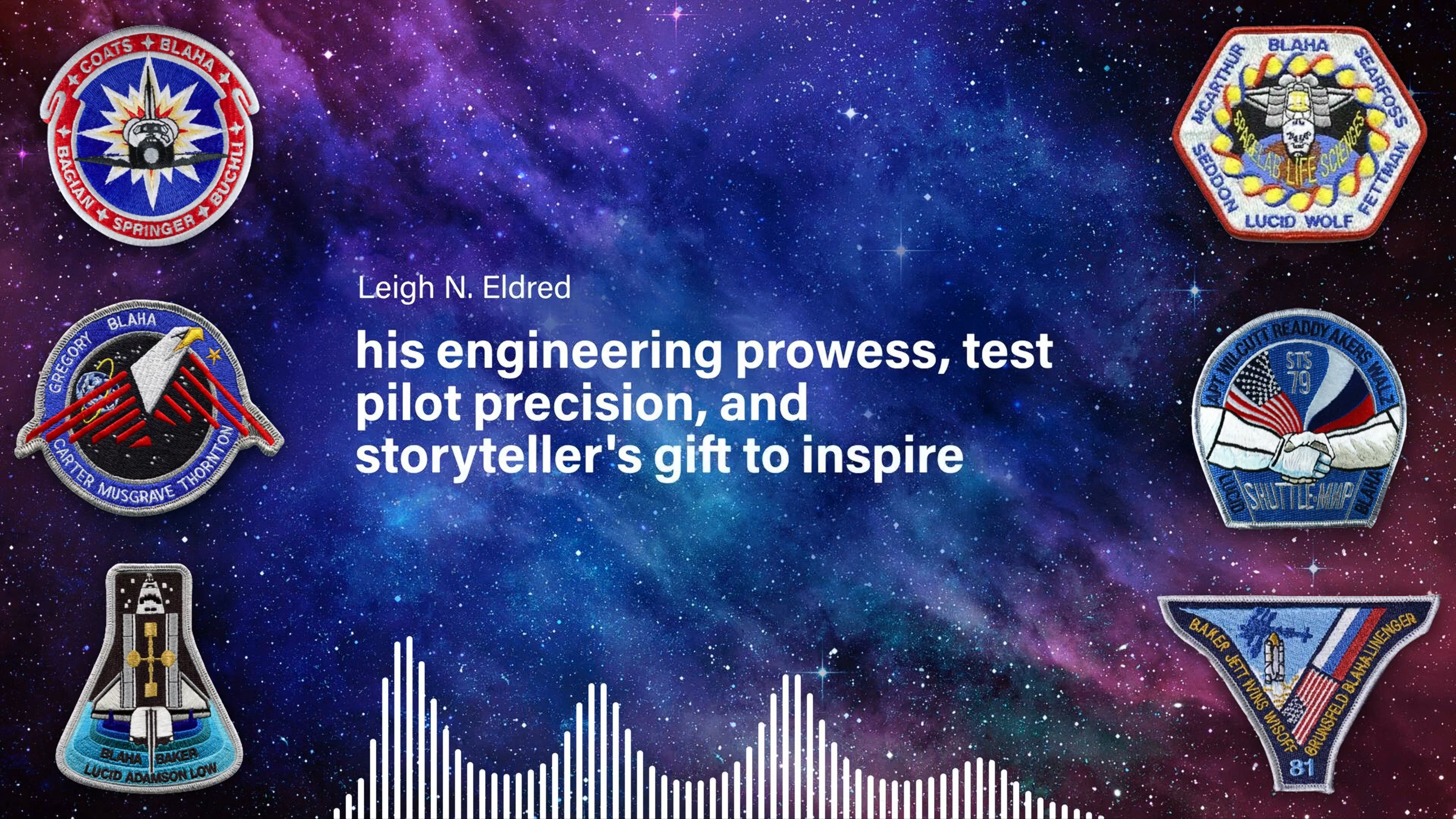
Video Podcast Still Image
Video Podcast Interview with John Blaha
Podcast Interview Transcript
Leigh N. Eldred Thank you for joining me on the Creative Convergence. It is an absolute honor to have you on the podcast today. Your extraordinary career journey perfectly embodies the multidisciplinary spirit celebrated on this show.
The Creative Convergence is a podcast for communication and design professionals seeking a true multidisciplinary edge. Within each episode, I share tactical strategies so that my viewers can build innovative, cross-platform solutions by fusing cohesive strategic messaging with artistic visual design so that viewers may learn how to create emotionally engaging experiences to achieve measurable business growth.
Before we launch our conversation, here's a snapshot of Colonel John Blaha's extraordinary journey, defined by curiosity, courage, and cross-disciplinary mastery, from Air Force fighter pilot to astronaut hall-of-famer and beyond.
John E. Blaha was born August 26, 1942, in San Antonio, Texas. From a young age he dreamed of flight, and that passion led him from Granby High School in Norfolk, Virginia, to the United States Air Force Academy, where he graduated in 1965 with a Bachelor of Science in engineering science. Recognizing that astronautics would play a crucial role in the space age, he pursued a degree at Purdue, where many other astronauts had previously graduated. There he joined a remarkable group of students, including his friend and fellow astronaut Roy Bridges Jr., where together they studied electrical, propulsion, and astronautical engineering. Pursuit of these aerospace fundamentals was key to achieving his dreams. He earned a Master of Science in Astronautical Engineering at Purdue University in 1966.
Upon return to active duty, Blaha earned his pilot wings in 1967 at Williams Air Force Base and began operational assignments flying F-4, F-102, F-106, and A-37 aircraft. He then deployed to Vietnam, where he completed 361 combat missions. In 1971, he entered the USAF Aerospace Research Pilot School at Edwards Air Force Base, where he piloted the NF-104 high altitude research plane to 104,400 feet.
Buzz Aldrin, the second astronaut to set foot on the moon, was the commandant of the Test Pilot School then. He advised Blaha to remain in that environment following graduation to be competitive for an astronaut slot. He needed to teach low lift-to-drag approach, zoom, performance, stability control, and spin flight test techniques. Heeding that counsel, Blaha honed his leadership, technical fluency, and teaching skills, all qualities NASA would later prize.
Later, in 1973, he was assigned to work with a Royal Air Force as a test pilot at the Aeroplane and Armament Experimental Establishment in the United Kingdom. There he flew stability control, performance, spin, and weapons delivery tests on the Hawk, Jaguar, Buccaneer, and Jet Provost aircraft.
After a three-year tour, he went on to study at the USAF Air Command and Staff College. He then headed to the Pentagon, where he worked for the Assistant Chief of Staff, Studies and Analysis, presenting studies to congressional staff, the State Department, and the Department of Defense on F-15s and F-16s.
In 1980, he received notification that he had been selected as one of 35 NASA astronaut candidates. His Pentagon supervisor and the Vice Chief of Staff tried to dissuade him, extolling a promising Air Force career. In an attempt to convince Blaha that a career change would be boring, they called a NASA administrator who countered with exactly what he would do for the next five years. He knew he was on the right path.
Four and a half years after training selection, Blaha was assigned a crew, and a launch date was set. Tragically, the 1986 challenger disaster devastated the program. After a thorough investigation and the implementation of crucial safety measures, the program resumed.
Blaha piloted his first flight, the STS-29 Discovery, in March 1989, when his five-person crew deployed an essential satellite and performed eight scientific and medical experiments before landing at Edwards Air Force Base.
Piloting his second flight, on Thanksgiving eve of the same year, the STS-33 Discovery carried Department of Defense and secondary payloads. The crew orbited the Earth 79 times before another hard surface landing at Edwards.
Serving as a spacecraft commander on the STS-43 Atlantis in 1991, the five person crew deployed another essential satellite and performed 32 material, physical, and life science experiments which supported extended duration orbiter and space station development. They were able to return to Kennedy Space Center after 142 orbits.
On the STS-58 Columbia in 1993, Blaha again served as commander of a seven-person crew in a mission that NASA deemed the most successful and efficient Spacelab flight ever flown. Life science physiology research encompassed cardiovascular, cardiopulmonary, neurovestibular, metabolic, and musculoskeletal experiments. They also accomplished other medical and engineering experiments aboard the orbiter before landing at Edwards fourteen days later.
In 1994, Blaha studied Russian at the Defense Language Institute in California for four months before immersing himself in the year and a half program at the Cosmonaut Training Center in Star City, Russia. This was preparation for the challenging Mir mission, in which he served as Board Engineer 2. Together, the crew conducted material life and fluid science experiments for four and a half months. He launched as a mission specialist in 1996 on the STS-79 Atlantis, and returned via the same shuttle in the same capacity in 1997 aboard the STS-81, which exchanged him with another astronaut.
After more than 7,000 hours of flight time in 34 aircraft. Five NASA missions with six shuttle flights and 161 total days in orbit, Blaha went on to serve in other terrestrial roles. His NASA roster includes leadership roles as chairman of the Space Flight Safety Panel, weather manager on the Mission Management Team, lead spacecraft communicator, member of the Shuttle Improvement Panel. He spearheaded contingency abort procedures, integral to crew safety. He also continued his public speaking engagements and joined USAA in 1997 as a vice president.
Colonel Blaha's awards span the Russian Order of Friendship, the Defense Superior Service Medal, Legion of Merit, Air Force Distinguished Flying Crosses, 18 Air Medals, Air Force Commendation Medal, British Royal Air Force Cross, and the Vietnam Cross of Gallantry. He earned many more awards from his university and military training. From NASA, he received numerous distinguished service, outstanding leadership, exceptional service, and space flight medals. He was inducted into the Astronaut Hall of Fame, and the International Astronomical Union and Smithsonian Astrophysical Observatory named Planet Blaha in his honor.
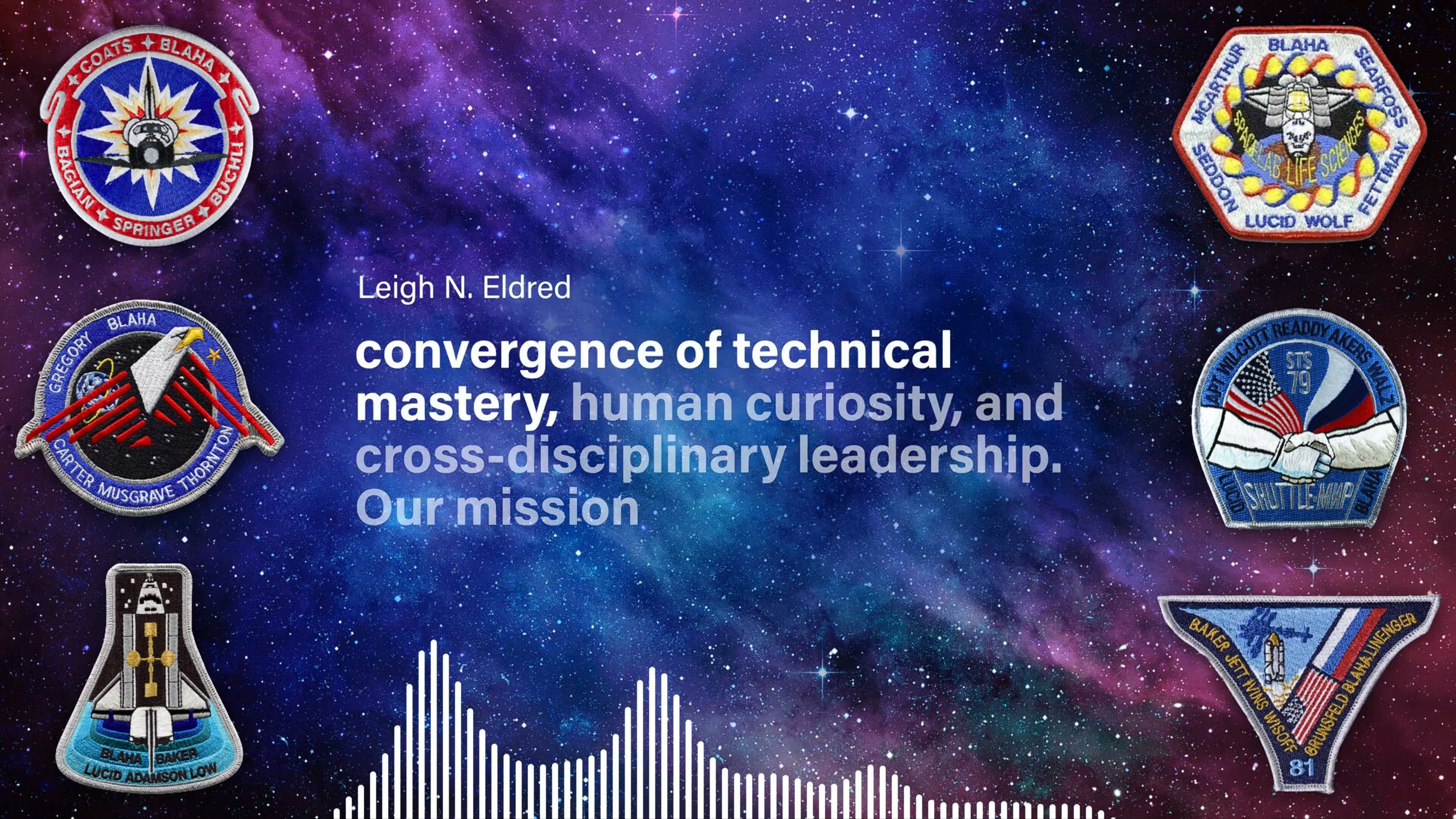
Today, John Blaha combines his engineering prowess, test pilot precision, and storyteller's gift to inspire audiences worldwide. Whether reflecting on "the best elevator ride in the world", the exhilaration of discovery in microgravity, or the boundless frontier that lies beyond low Earth orbit, he exemplifies the creative convergence of technical mastery, human curiosity, and cross-disciplinary leadership.
Our mission today is exploring the lessons you've learned while navigating technical challenges in microgravity, capturing Earth from space photographically, integrating the latest technologies, learning Russian for cross-cultural teamwork, and translating it all into a narrative that has inspired curious audiences.
By sharing your unique experiences, you'll give our listeners practical insights to sharpen their own multidisciplinary skills and lead with the same curiosity, creativity, and precision that has defined your career. Let's get started! You've logged 161 days in space across five missions, an incredible journey from Air Force Academy to astronaut. What first ignited your passion to venture into space?
John E. Blaha Well, let me just tell you, when I was a kid, I always grew up on Air Force bases. My father was in the Air Force, and so I wanted to go to the Air Force Academy to be a fighter pilot in the Air Force. When I was at the Academy, my freshman year, we had the first human flights in space. And, um, it started with Yuri Gagarin and of course the rest with our Mercury astronauts. And it was at that moment that I said, boy, when I stopped flying jets for the Air Force, I want to go fly spaceships for NASA. So that's what started it.
Leigh N. Eldred That's amazing. In your career, you've bridged engineering, science, cross-cultural teamwork, and public speaking. How do you see that thread of creativity and communication weaving through those diverse fields?
John E. Blaha Yes, you're right. I'll tell you. I became so interested in space that when I was at the Air Force Academy, it improved all my grades, to start off. And then, when I went to Purdue University, I got a master's degree in astronautical engineering, because I thought that would help me become competitive. Then I was in the Air Force, everywhere I went I loved, but then as soon as I got there I started working on my next assignment, because I learned from reading the bios of the Mercury astronauts that if you flew many different airplanes, it would help you be a better astronaut.
So I did that, but I must tell you, in all of that, looking back on it, the thing that made the biggest difference was the woman I married. She was also an Air Force brat and grew up in the Air Force, and I knew that I would be moving a lot to become competitive, to become an astronaut. So I was very inspired that her dad was in the Air Force, and she also had moved around a lot. So I knew she would be willing to do that, and she did all the way through and was a huge support of my being able to achieve my dream.
Leigh N. Eldred That's wonderful to hear, and Brenda's an amazing person. How long have you been together now?
John E. Blaha 58 years.
Leigh N. Eldred Wow. Congratulations!
John E. Blaha Yeah, we just passed our fifty-eighth anniversary.
Leigh N. Eldred Oh. That's wonderful. Space missions may force you to solve unexpected challenges with limited resources at any time. Can you walk us through a moment where you had to draw on fields outside of your core training to find a solution?
John E. Blaha Yes, it happens all the time. Like anything you do, you can drive a car down the highway and little things happen, and you have to react to it, and that's the case in spaceflight. I could give you many, um, we, train for everything. And when you fly your mission, when you land, you say, wow, I only used one percent of my training.
Leigh N. Eldred Oh, wow.
John E. Blaha Because you get prepared for everything. Um, one example was my second landing in the space shuttle, due to very unusual high winds and many other factors. We had to land on a runway at Edwards Air Force Base, they had never landed the space shuttle on or you had ever trained for. Even when you were at Edwards training. It didn't have any of the normal things to help you. So you pretty well did it, like you were flying a Cessna 172. Whether you liked it or not, you came overhead Edwards at 40,000 feet doing Mach 1.3 and made a diving 360-degree turn onto the runway. Uh, literally in two minutes, you go from 40,000 feet to landing on the runway. You're coming down that quick, you're flying a brick. And, uh, that was a very challenging, landing. And I could tell you other events, but that's one.
Leigh N. Eldred Wow, That's incredible! Thank you for sharing that. I can't even imagine being in that position. That is incredible. As an astronaut immersed in life science and physiology experiments in microgravity, how did you balance technical precision and creative intuition when adapting procedures on the fly?
John E. Blaha Okay, in my case, I'm going to give you a specific example. But before I do, I'm going to tell you the truth at a high level.
Leigh N. Eldred Okay.
John E. Blaha I was a pilot and a commander. We always had a minimum of three mission specialists. One flight, I had five. I'll just give that flight as an example, a two-week life science research mission. The important thing is to know what you're good at, and what your responsibilities are, and to be willing, that's a key word, willing to hand out leadership of many other areas to every member of that crew. And learn to depend on them. And in training, let them be in charge of their area. I don't care how much I used to tell my crew, it doesn't matter how much we screw up during training. The purpose of the training is to learn, and you just make sure you're ready to perform your area of responsibility.
Now, on that mission, as an example, Rhea Seddon was our payload commander, and Rhea Seddon was a very smart medical research doctor. And she knew life science research up, down, inside, and backwards. And she could work and talk at the level of all the science people doing heart, lung, whatever the area of expertise was, she could meet with them, talk with them and let them also become a part of our crew. They didn't fly, but she thought they needed to be part of our crew. And that's what happened, and we had a very, very successful mission.
The NASA administrator afterwards said, John, this was our best science mission we've ever flown. And I said, well, the only reason it was, is we distributed all responsibilities to different team members and everyone did their part. So that's the key, I think.
Leigh N. Eldred That's amazing! And it's amazing that you're giving credit to other people to where it's due. And that is something that not everybody does, and it's appreciated, really being a team.
John E. Blaha By the way, that's an important word you just said.
Leigh N. Eldred Yeah.
John E. Blaha When I became an older astronaut, and became part of the selection process at an interview, in the end you start off with thousands of people competing. And you get it down, you whittle it down to a list of about 200, and they come to the Johnson Space Center in different numbers and spend time there for a week. You get to know them. You talk to them a lot. In the end, you now whittle your list down to maybe thirty. The most difficult thing in the world, then, is to whittle it down to ten, who you're going to pick.
In the end, guess what the bottom line is? You say, which one of these people do I want on my team? Who are a team player? All the other things don't matter anymore. All their degrees, everything they ever accomplished, because those thirty people are now equal. The only difference is, which ones do you think are the best team players?
Leigh N. Eldred That makes perfect sense, especially with such high stakes and being in such a small environment for so long. You really have to be able to trust and count on the other person and be able to work together. If you have any kind of conflict, that would just be a nightmare.
So, we're going to, uh, switch gears a little bit. You captured some incredible photos while on board spacecraft. How did the constraints of microgravity and your unique vantage shape your approach to photography, and what role do those images play in communicating the wonder of spaceflight?
John E. Blaha First of all, the role they play in communicating spaceflight was very important, because it's different, and people can't imagine what things are unless you show them a good picture. So that's the role it played.
Second, as far as taking the photography, it was easier in space than it is here, because you could float around. You're maneuvering around like a fish in a goldfish bowl. And up and down can be any way you want it to be. And you just sort of glide over, and get the perfect setup that you want, and take your picture. In other words, maybe the best thing to do here is to glide over to that corner of the room. And so that's the point. So it's actually easier to get in position to take a great picture.
Leigh N. Eldred That's amazing. I wouldn't have thought that because I would think you'd be moving unsteady.
John E. Blaha You learn how to steady yourself very easily in no gravity. So you become like a fish in a goldfish bowl.
Leigh N. Eldred I can't picture it, I'm trying! That's incredible, to have that experience, to be able to do that.
During your training, and then extended stay on Mir, you learned to speak Russian and operate in a multilingual environment. How did studying language and navigating cultural differences influence collaboration with your cosmonaut crewmates, and what lessons may communicators draw for bridging linguistic divides within their own teams.
John E. Blaha Okay, that actually was something I was lucky at. My father was in the Air Force when I was fourteen, fifteen, and sixteen years old. I lived on the southern side of Paris, France, and my friends were French kids. And I learned the French language, just like a two-year-old learns a language. They said things, I heard it, I repeated it, and over time, I learned the French language with my ears and my mouth replicating the noise.
So now, when I got assigned to go to Russia to fly with the Russians, I kind of smiled, I started, you know with the normal language classes, bringing you the alphabet. And by the way, the Russian alphabet is very different than our alphabet. So it even becomes a more difficult language. I'll give you two examples. Our C is their S, our P is their R. And then they have about eight other symbols you've never seen before.
Anyway, when I went to Russian languages and they sent me to Monterey, California, where the military has a place where they teach people foreign languages. I had four Russians who were my instructors. They never spoke a word of English to me, not one word. But I asked them in English one day early on, I'm going to bring you five sentences every day of things I want to learn how to say in Russian. So I have a tape recorder, and I'm going to turn it on, and you go number one, and you just say it in Russian. это зависит от многих переменных, that means it depends on many variables. That's a typical answer in an engineering course. So I picked all these different things. You know I'm happy to be here, Я счастлив быть здесь, I memorized them.
When I went to Star City, Russia, when I went through the gates, the only person I ever spoke English to was my wife, Brenda. Otherwise, it was one hundred percent Russian, but I knew about a thousand lines I had memorized of all these things I wanted to say. And I started talking to the Russians. And this is true, If you learn a foreign language, and everybody knows this, so you learn it in America, then you go to, let's say, Spain, and now you're trying to put words together and make up a sentence and all that baloney. And then the Spanish people look at you like, gee, what did you say? Because they don't hear you real good, and it's demoralizing. But if you say something in that foreign language and they go, wow, that's really good, John, you sound like a real Russian. And now it inspires you and you feel confident, and now you even do it better.
So a year and a half into the Russian language in Star City, it was a spring. I'm walking down a path and a Russian walks by me, and he said пришла весна. And I went, what? And I never heard that before, but I knew what he just said to me. Spring has arrived. And then I was realizing that I was hearing Russian. I stopped translating and actually I was breathing, thinking, and speaking Russian, just like we speak English.
So, my answer to people here is when you learn a foreign language, you must have the accent they have. And that's what I got by replicating the noise I heard from those different professors. I could read them in a book somewhere and I wouldn't even recognize them. I learned the Russian language by hearing and speaking, and then of course, the written checklists I needed to know. I understood that writing.
Leigh N. Eldred Wow. That's amazing. That isn't the usual path that most people take.
John E. Blaha That's exactly right. You're right. That's why I told people that, because I saw it. The bottom line is, if you replicate the noise a real Russian makes saying a particular idea, that's how you can really learn to speak a foreign language.
Leigh N. Eldred That's incredible. Thank you. Thank you for those insights. So, having witnessed decades of technological evolution, what possibilities excite you most about integrating artificial intelligence into mission planning, robotics and astronaut training?
John E. Blaha Uh, artificial intelligence. That'll be a new thing. And I don't want to necessarily guess at an answer to it.
Leigh N. Eldred Okay.
John E. Blaha I think of AI and I could be totally wrong. So I'm going to say something now as, just more deeper and thicker, memory and logic in a computer model. I understand computer models, but all I can do is say it's much more deep with AI. And other than that, I don't use AI.
Leigh N. Eldred So much is changing so quick. It's growing and changing every day.
John E. Blaha Right.
Leigh N. Eldred That's why I was interested in, because you've seen so much change in technology over your lifetime.
John E. Blaha I've seen an awful lot. I want to make one statement on that. Went back when I took a course at the Air Force Academy. I'll show people how important equations are. I learned an equation. I'll never forget it. V squared over two minus mu over r equals minus mu over two a. I love this equation. I could tell you all the applications of it. You wouldn't believe it. If you want to know how fast you need to get going to get to the International Space Station, you plug in, solve for V, you come up with 17,500 miles an hour, and that'll get you to the space station. If you want to go to the moon, you plug it into that equation V squared over two minus mu over r equals minus mu over two a. You get a v of 24,266 miles per hour. And then you want to know how fast are you going when you arrive at the moon. Plug it into that equation. You get 5,300 miles per hour to circle the moon. It's the most powerful equation. The Hubble telescope moves on it, comets move on it. All of our planets are moving on that equation. It is unbelievable how you can expand your knowledge in the universe because of your knowledge of that one equation. Pretty cool.
Leigh N. Eldred Incredible! I know I keep using that word, but really incredible!
John E. Blaha Yeah.
Leigh N. Eldred So, you've launched a number of incredible career pivots in your life. Which multidisciplinary competencies were most critical in navigating those transitions?
John E. Blaha There are, I guess two. The first is I love being in the Air Force, absolutely love my fifteen years in the Air Force. But when NASA said, John, we have selected you to be an astronaut, you need to be here in three weeks, I said yes. I had the Chief of Staff of the Air Force get together with me and say, John, why are you doing this? You have all this great jobs in front of you in the Air Force. And I said, I know that and I love the Air Force, but if I don't do this for the rest of my life, I'll say, you turned down your goal to go fly in space.
So, you just need to make the change when you need to make it, forget the past, and move forward. And in this case, start all over again, because you have to now compete inside the astronaut office. So, it's a different, place, and it has nothing to do with what you did in the Air Force. That's one example, I could give you more, but then there's another very important element that I told you at the start. At the time I didn't realize it, but I do now. And you never could make that change if you weren't married to a spouse who was just willing to stop everything, throw all that away and just go do it. So that's another very important factor. Again.
Leigh N. Eldred Absolutely! Absolutely, you have to have your family in tow with you and supportive.
John E. Blaha Same thing when I went to Russia. I can't believe it. That woman was willing to go and live in an apartment in Russia that was very different than America. It was all Russian language when she left to go outside shopping or food or anything. But she did it, and she did everything for me, and I did nothing but go to class and study at the Cosmonaut training center, and then I'd come home. So I was like a fifteen-year-old kid living in her apartment doing nothing, and she was doing everything. So that's important.
Leigh N. Eldred Absolutely. Having led crews in orbit as a Spacecraft Commander, and guided panels on the ground as a chairman, what key insights would you share with emerging leaders who are still honing their craft?
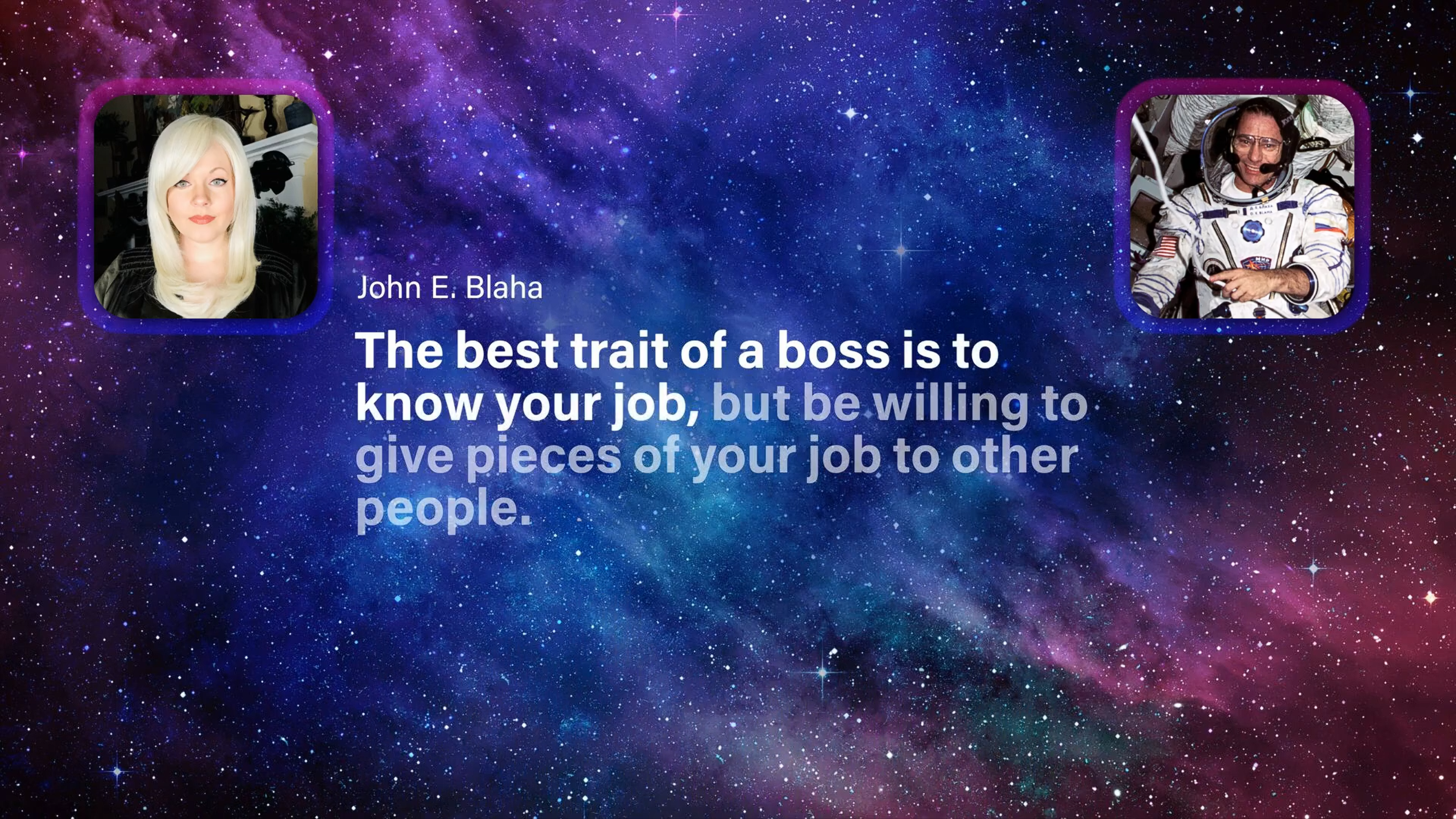
John E. Blaha I'll go back to something I think I said earlier, a leader, the best leader, number one, needs to know what they're doing. If you get assigned away from your knowledge, that's not good, but if you know what you're doing, then you are willing to let other people have a piece of the pie. Each one of those individuals then will give you incredible work in the area you give them to be the expert in. And that could be a job here on the ground, that could be an automotive plant, that could be in a pharmaceutical industry. The best trait of a boss is to know your job but be willing to give pieces of your job to other people. And then instead of just one brain accomplishing everything, you have ten brains or you have one hundred brains.
That's my advice to anyone to be a good leader, because then as a leader, if someone does something wrong, it's okay. But you have to go to them and say, you did this wrong. You have to know what you're talking about, or they'll think, gosh, my boss is an idiot. So you need to know, and then you need to be willing to tell an employee they're doing something wrong privately, and listen to their response, and have an interchange with them. That's my answer to that leadership question.
Leigh N. Eldred So be aware of everyone's jobs, know your stuff, have a brain trust, delegate, and be able to communicate.
John E. Blaha That's a very good word, delegate, and communicate. That's right.
Leigh N. Eldred Thank you. When you step into the role of a public speaker, how have you translated the intensity of space flight into a narrative arc that connects with audiences who have never left Earth?
John E. Blaha Okay. I always thought that was easy. My boss in Houston, Texas, told me the reason he thought I would do well going to Russia and doing this exchange with the Russians, is because I like to talk. So he said, number one, that means you'll like to learn the Russian language. No way you're going to go live somewhere for two years and not be able to talk to people. So that was one thing he always told me.
Public speaking is the easiest thing in the world. If you tell people the truth, and don't write down necessary a speech, you know the subject real well. You see your audience. You meet your audience. I always like to greet people at the door coming into the auditorium. Ask them questions, get some sense, because then you can tailor what you're now going to tell them by what you learn, who they are and what they're maybe interested in. And I found that to be a good way to do it. But tell the truth. So, John, how do you go to the bathroom in space? And, you know, the bottom line is, answer them. Just tell them. That's it. No different. That's what you have to do. You have to tell them the truth. It's easy to tell the truth. If you make up an answer, you can get mixed up.
Leigh N. Eldred Tell them the truth, that's great. I didn't know that you didn't plan your speeches, that you give your talks on the fly. You're such a good speaker, and you have all of this information that just comes forth so easily. So I could see how that would be easy for you, but so much harder for other people. But I appreciate that. Start from a place of truth and be authentic to your audience.
John E. Blaha Right?
Leigh N. Eldred Okay, so drawing on your vast education, training and expertise, what framework would you recommend to professionals aiming to build their multidisciplinary edge?
John E. Blaha Well, I'm going to answer you this way. The most important thing is you better marry the right spouse, period. Or your whole life can get mixed up. So that's number one. Number two is follow your heart. I don't know how to knit. I don't know how to make clothes. I know my strength is with numbers, and equations, and stuff like that. So follow your heart. Now, in my case, my driving thing that I wanted to achieve was to be a pilot in the US Air Force, period. And then I wanted to be a pilot flying spaceships. So keep at it. So even though I was in that Air Force doing a great job and had a great career, I just walked away from it, and started all over again in Houston, Texas, in the astronaut office, because that's what my heart wanted to do. So, those are my two things. Make sure you have a relationship with a spouse that is the right one for you. And number two, follow your heart with your career.
Leigh N. Eldred Two aspects of the heart. Really?
John E. Blaha Yes. That's right.
Leigh N. Eldred Okay. In space, you learn to look at problems from every angle. How can professionals adopt that 360-degree mindset here on Earth?
John E. Blaha Okay, you look at planet Earth from space. You realize, wow, what an incredible opportunity humans have living on what is like a blue and white marble going through the black of space, because that's what it is. Earth is a blue and white marble. That's what it looks like. It doesn't look like the globes we see in a library or in a schoolroom. Doesn't look like that at all. It looks like a blue and white marble. And you realize, my gosh, what an incredible place, and all that life and activity is going on, but yet we're all on the same little blue and white marble going through the black of space. Moving on that equation, V squared over two minus mu over r equals minus mu over two a. The Earth is moving on that equation going around the sun. So that's one aspect of it.
The other aspect of it is, when you're looking out, you see thunderstorms, over here, and then you see streaks of electricity just four thousand miles over here, boom, boom, boom, the thunderstorms go off. Then another streak, boom, boom, boom, they go off here and all that connectivity of the planet and all the connectivity of the white clouds on the planet.
Pretty special planet we live on here on planet Earth. I go out every day now as an eighty-three year old with a little kitten I have, and I've trained it to stay in the yard, because I don't want it to get hurt. And she walks around. I spend forty-five minutes with her every morning and every evening. I'm marveling at nature now. She has given me something. Here I thought I was giving her something, the opportunity to look around outside and have fun, etc. But in the end, I'm also getting something. She's taught me, John, take a look at nature, see what's going on. And it is incredible to watch all the bugs, the animals, the birds, everything that's going on that we don't see normally in our normal life. So there you are.
Leigh N. Eldred I see that we're all one people on one planet, and when we're here, we need to appreciate all that's around us.
John E. Blaha Oh, we have something incredible here. Watching a sunset, watching a sunrise, looking into the night sky and seeing various things, and the same thing is here. That's what all of that helped me do. It helped me look for all of those things on planet Earth, because they're right here in front of us, if we're just willing to look at them.
Leigh N. Eldred That's beautiful. Thank you. Thank you for sharing that.
John E. Blaha Okay.
Leigh N. Eldred Okay. So now we have a little lightning round. What is one piece of gear on earth that you couldn't live without?
John E. Blaha My pants. That's what comes to mind.
Leigh N. Eldred Completely unexpected, but fabulous. I was thinking camera. What is your favorite metaphor to use when describing teamwork?
John E. Blaha I can't think of a word. But, um, my wife and I are the best example of a team.
Leigh N. Eldred Oh. That's beautiful.
John E. Blaha I can't think of anything other than that. We worked as a team with everything that goes on in our current world that the two of us live in.
Leigh N. Eldred That's beautiful, and especially given all of the high profile teams that you've been a part of, that is especially amazing. I know she would love to hear that. So, for your next frontier, what is one dream that you still want to chase?
John E. Blaha Actually, I tell God, I feel very comfortable. I thank him for giving me everything that I've been able to do. I don't really have any dream. If I have any other thought, I tell him to take care of Brenda. That's my wife, because she takes care of everything around her that's alive, and they would all really miss her. But that's the best I can do on that, because that's the truth.
Leigh N. Eldred Absolutely. And thank you for mentioning your faith. I know that's been a huge part of your lives, and I appreciate that. It's not all about the science, there are some times to bring the heart and truth into that. So, what final thought would you leave our listeners with about the power of combining technology, creativity, and curiosity in any field?
John E. Blaha What I would tell people, because it's true, is the next, I believe, step for humanity as humans on planet Earth. Let's keep moving into space, and our next objective needs to be humans going to Mars. I think it's an area that would inspire us. And like Buzz Aldrin and Neil Armstrong said, when they went to the moon, everything they thought wasn't what they brought back, all the thousands of new things they learned by going to the moon that we never thought of.
And I'll give you one that everybody listening can appreciate. It was the first time we saw climate change on planet Earth and the impact of climate on planet Earth. So, the Apollo missions, that was one of many, but that one idea brought the whole concept of we need to understand the climate on planet Earth. And there were many others, but it had nothing to do with anything somebody thought about before we went to the moon. The same thing will happen when we go to Mars. What we will learn is that, wow, I didn't know we should be thinking about that. Whatever that will be.
Leigh N. Eldred Yeah, that is especially interesting given the Artemis missions. Thank you for sharing that.
John E. Blaha Yeah, it needs to be our next goal. The challenges of the technologies necessary to do it will push the limits, which is good. For an example, I'll give you one example, and there are about twenty very important things we need to learn. But one of them is, and again the smart people tell me answers like, I flew a mission on a Russian space station. I came back, they told me a big number of kind of radiation I had. And I said, well, I'm a stupid guy. So, tell me in English what that means. They said, John, you had 1,700 chest x-rays. I said, you got to be kidding me. And so then I said, how many chest x rays would you get on a mission to Mars? And they said, John, that's what we need to figure out. There's no space vehicle we have ever built that if you tried to fly on it to Mars, on day 150, the crew would wake up in the morning and the blood in their vessels would be solid. In other words, we'd all be dead due to radiation. Being here on planet Earth with our moon, we have a magnetosphere that kind of protects us against gamma radiation, on a mission to Mars you don't have that. So human beings would all wake up on day 150 with the blood in their vessels solid. Obviously, we have to solve that problem.
Leigh N. Eldred I've been worried about all the epigenetic switching and the longer-term studies and with cancer, but I wasn't thinking about solid blood.
John E. Blaha Well it's just incredible, and so that's what a smart person told me. Because one thing I learned that I had found at NASA is, there's all these smart people, and they tell you stuff and you can sit there and shake your head like you know, but if you want to be honest and say, I don't have a clue what you just talked about, can you put that in real simple language that I can go tell my mother and she would understand it, and they would then do it for me. You can always tell a real smart person in their area of expertise, they can end up telling you a very simple answer that's not complex and complicated. That's something I learned with my eighteen years with NASA.
Leigh N. Eldred You're right, they understand the problem enough to be able to explain it in different ways.
John E. Blaha And that's exactly right. The same way you can when you're talking to an audience, as you asked me earlier, you have to tailor it to the audience. If it's an elementary school class, you've got to talk to those kids different. Talk to them like they're your grandkids. And anyway.
Leigh N. Eldred I appreciate that, being able to teach and talk to different people at different levels to where they understand what you're communicating. That's very effective, and that's a very useful skill.
John E. Blaha Yeah.
Leigh N. Eldred So, that brings us to the end of another episode of the Creative Convergence. John, your stories, from piloting spacecraft to framing Earth's beauty through camera lens, from the cultural exchange aboard Mir to embracing technology on the ground, all remind us that the real innovation happens at the crossroads of various disciplines. Your insights on problem-solving in microgravity, leading diverse teams, and crafting narratives that resonate here on Earth, give us a roadmap for nurturing our own multidisciplinary edge.
Listeners, take John's framework to heart. Lean into curiosity, blend technical mastery with creative instinct, and never lose sight of the human spark that turns data into motion. Whether you're designing a campaign, building a user experience, or guiding your next team, remember to look at problems from every angle and use the tools available to you, from language to AI, to amplify your authentic voice.
If you enjoyed today's conversation, subscribe, share, and join The Creative Convergence podcast and newsletter for more tactical strategies that fuse strategy with design. Until next time, keep converging your skills, expanding your horizons, and crafting engaging experiences that drive real results. Thanks for listening!
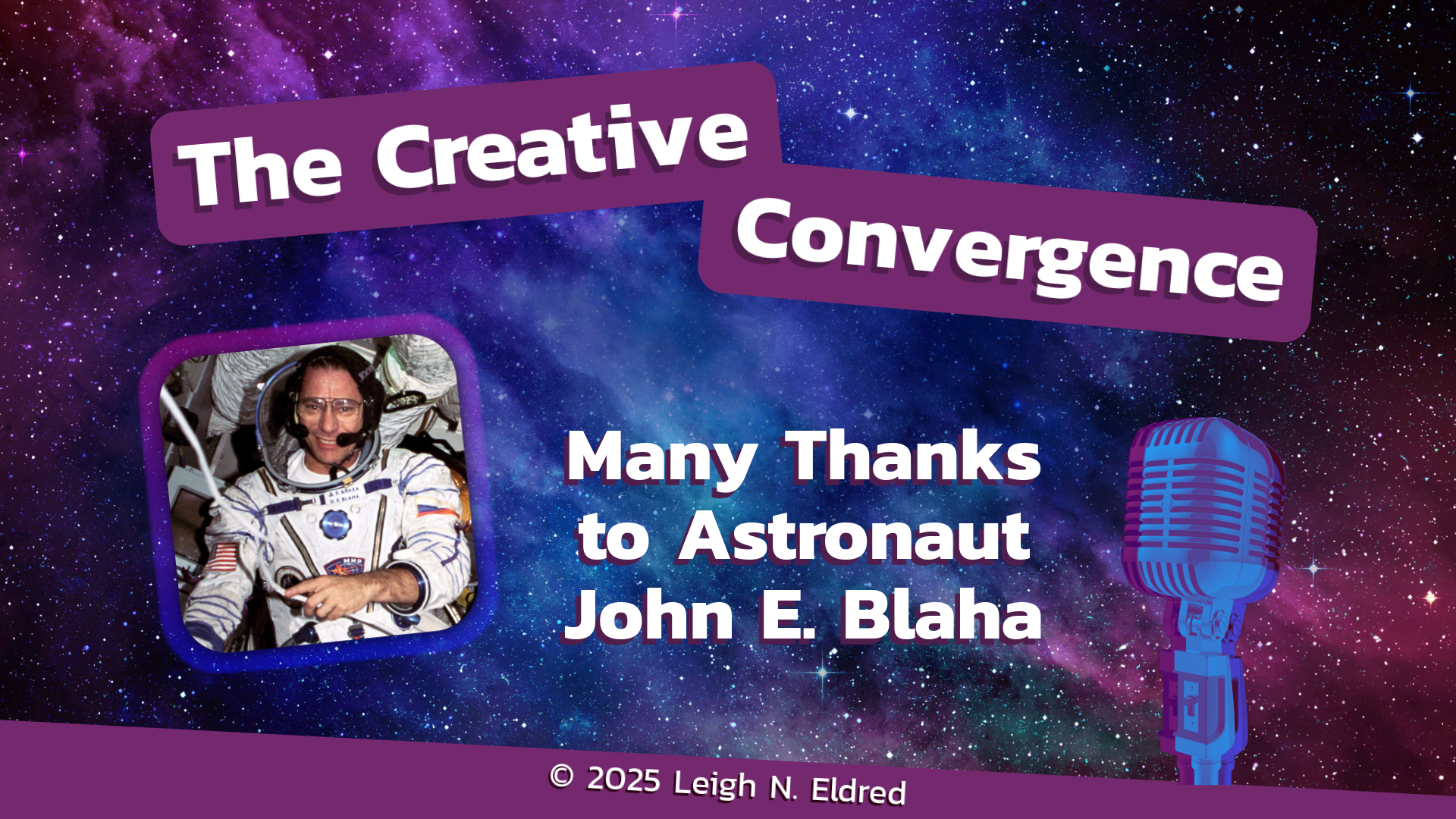
Video Podcast Closing
